Food Processing Equipment and Steel Fabrication in Woodland and Davis
Woodland is 33 miles up I-5 from our shop. Davis is 26 miles west on I-80. Between them sits the densest concentration of food processing equipment and seed technology in California, and both towns run on a clock that decides when work on that equipment can happen.
That clock is the reason this page exists. Woodland is home to one of the largest tomato canning operations in the world, running 8,000-plus tons a day through a pack season that lasts from roughly July into October. When the line is running, nothing gets touched. When it stops, there is a fixed window before it has to run again. A fabricator who does not plan around that is useless here regardless of how good the welds are.
Coverage
- 33 mi
- Shop to Woodland, I-5 north
- 26 mi
- Shop to Davis, I-80 west
- 300 mi
- Inside the full EPC and preventative-maintenance band
- 600 mi
- Field services, fabrication delivery, and rigging
What We Build for Woodland and Davis Operations
Custom seed dryers. Designed to the crop, the incoming moisture, the target moisture, the throughput, and the building you actually have. Catalog dryers assume a standard crop and a standard footprint, and seed operations in this corridor are neither.
Seed priming rooms. Complete rooms — enclosure, environmental control, material handling, and the structural steel to carry all of it — engineered together rather than bought from three vendors and reconciled on site.
The full detail
Sanitary and washdown-rated fabrication. Equipment surrounds, platforms, guarding, and enclosures built for caustic and high-pressure cleaning: continuous welds, ground and polished seams, sloped surfaces that drain, and no horizontal ledges that hold product.
Cannery and process support steel. Conveyor and equipment supports, elevated platforms, access stairs and catwalks, hopper and tank supports, and the structural work needed to fit a new machine into a line laid out decades ago.
Dust collection and air handling. Ducting, hoods, and support steel for seed conditioning, grain and bean handling, and dry ingredient lines — routed through buildings that have no ceiling space left.
Campus and research facility work. Lab support structures, equipment platforms, greenhouse and headhouse steel, and access systems for research facilities working around teaching and trial schedules.
What Woodland and Davis Actually Process
Woodland is a food processing town in the most literal sense. Pacific Coast Producers runs its cannery here — a grower-owned cooperative facility the company describes as one of the largest tomato canning operations in the world, moving 8,000-plus tons a day at peak and drawing from 14 growers within about a 16-mile radius. Bayer has run a vegetable seed research facility in Woodland since 1972 — roughly 160 employees across 90,000 square feet, 68 greenhouses, and about 400 acres of test fields. Around them sit tomato, rice, nut, and bean handlers, cold storage, and the distribution buildings that serve them, concentrated along the East Main Street corridor and out along the county roads that grid Yolo County.
Davis, 12 miles south, is the research half of the same industry. HM.CLAUSE runs vegetable seed breeding and production operations here. UC Davis is the top-ranked agricultural sciences university in the world and generates an estimated $9.57 billion in annual regional economic impact, with the Seed Biotechnology Center and a long roster of plant science, food science, viticulture, and engineering programs.
The full detail
The two towns together form what the industry calls a seed cluster — several dozen seed companies, breeders, and supporting technical firms inside a twenty-mile radius, drawn by the university and by Yolo County's soils and climate. For a fabricator, that concentration produces a very specific kind of work: small-batch, high-precision, research-adjacent equipment where the specification changes between trials, alongside full-scale production equipment that has to run reliably for a decade.
This corridor is the closest match in our whole service area to what we actually build. The seed dryers and priming rooms in our portfolio were built for operations like these.
Getting to Your Woodland or Davis Facility
Woodland: 33 miles, I-5 north, about 35 minutes. Davis: 26 miles, I-80 west, about 30 minutes. Both are comfortable same-day round trips with time on site, and both pair naturally with West Sacramento on the way in or out.
At this distance we iterate the way we do in the Sacramento metro rather than the way we do at 170 miles. Field-verify in the morning, bring a template back the same week, confirm the fit before committing material. For seed and research equipment, where the specification frequently changes once somebody sees a mockup, that responsiveness is worth more than it sounds.
For the work that has to land inside an off-season window, the short haul means a crew arrives at the start of the shift rather than partway through it, and a problem discovered at night does not strand anybody two hours from the material rack.
The Constraint That Governs Everything Here: The Season
California's processing tomato harvest runs from roughly early July into early or mid-October — about three and a half months, and in a big year that means eleven million tons statewide moving through canneries on a fixed schedule. Seed conditioning and drying follow their own harvest calendars, staggered by crop.
What that means for a project:
The full detail
You have a window, and it is not negotiable. Work that touches a production line has to happen between packs. In practice that means late fall through spring, with the tightest constraint being that everything must be finished, commissioned, and proven before the first fruit arrives. A line that is not ready on day one of the pack does not get a grace period — the crop is in the field and it is coming.
The window is heavily subscribed. Every processor in the corridor wants the same months, and so does every contractor's calendar. Operations that scope their off-season work during the pack — while the problems are visible and fresh — get the schedule they want. Operations that call in November are choosing from what is left.
Backward scheduling is the only scheduling that works. Give us the date the line has to run and we work backward through commissioning, installation, fabrication, procurement, and engineering. Engineering and long-lead material are usually the binding constraint, not shop time, which is why the conversation needs to start months before the wrenches do.
And the season is why field verification cannot wait. Measuring a running line is different from measuring a stopped one, but waiting for the shutdown to take dimensions burns the first week of the window. We would rather come during the pack, work around your operation, and take the measurements while the line runs — then arrive on day one of the shutdown with steel already fabricated.
Published 2026 Budget Pricing
We publish our numbers. These are Northern California fabrication-only budget ranges. Custom processing equipment, seed dryers, and priming rooms are quoted per project — the ranges below cover the standard structural and access scope that usually accompanies them.
| Item | 2026 budget range |
|---|---|
| Guardrail system, 42" OSHA | $165–$225 per linear foot |
| Standard steel handrail, 2-line | $140–$185 per linear foot |
| Fixed ladder, 20–30 ft | $3,500–$7,500 |
| Steel-framed roof access hatch | $3,500–$8,000 |
| Light-duty steel mezzanine | $18,000–$35,000 |
| Heavy industrial steel mezzanine | $35,000–$75,000+ |
| Mechanical or generator enclosure | $8,000–$25,000+ |
Fabrication only. Final pricing moves with material selection, structural requirements, engineering review, finish type, complexity of fabrication, and project scope and quantity. Installation is quoted after a site visit and field review. See the full 2026 price guide →
Related Work
Custom seed dryers → — Seed drying systems built to a specific crop, moisture curve, and throughput, with the structural steel to carry them. This is the single closest portfolio match to the work this corridor generates.
Seed priming rooms → — Complete priming rooms: enclosure, environmental control, material handling, and support structure, engineered and stamped as one system.
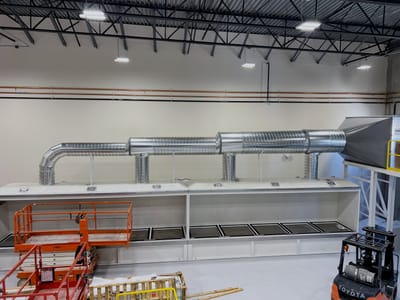
SEED DRYER — ENCLOSURE AND SUPPLY DUCTSEED PROCESSING · DWG PRJ-02 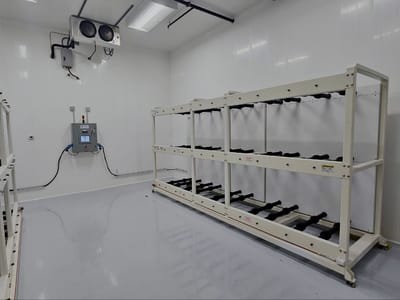
PRIMING ROOM — RACKS AND CONTROLS


Service area
Nearby
Divisions
Related services
Custom Processing Equipment Design and Build
Custom processing equipment, skid systems, and automated material handling. Sanitary washdown design, PLC-ready. Engineers and fabricators under one roof.
Specialized Industrial Enclosures
Process, hazardous-area, food and pharmaceutical, and equipment enclosures. Explosion rooms and clean process rooms designed, built, and installed.
Structural Steel Fabrication and Erection
Structural and miscellaneous steel fabrication in Rancho Cordova. Platforms, mezzanines, supports, and access systems. Engineers on staff who stamp.
Industries
Industries this work runs in
Food and Beverage Processing Equipment Installation
Food and beverage processing equipment installation inside live plants. Sanitary supports, utility tie-ins, washdown design. 600 miles from Sacramento.
Seed Processing and Conditioning Equipment
Seed processing and conditioning equipment: dryers, priming rooms, cleaners, conveyance. Designed, fabricated, and installed by one accountable team.
Campus Facilities and Research Equipment Installation
Campus facilities contractor for equipment installation, structural steel, and utility work. Sequenced around class schedules and shutdown windows.
Portfolio
Related project work
Seed Dryer Design, Fabrication, and Installation
Seed dryer design, fabrication, and installation for agricultural processing. Custom equipment built by engineers and fabricators under one roof.
Seed Priming Room Enclosures
Controlled-environment process enclosures for seed priming and conditioning. Designed, fabricated, and installed as specialized enclosure projects.
Coverage
- 600 mi
- Field services, installation, fabrication delivery, and rigging from Sacramento
- 300 mi
- Full EPC delivery and preventative-maintenance programs
- Nationwide
- Engineering, design, and fabrication for shipment
Frequently Asked Questions
When should we scope off-season work on our line?
During the pack, while the problems are still in front of you. The off-season window in this corridor fills early because every processor wants the same months. Operations that identify the scope in August and put engineering in motion get the schedule they want; operations that call in November take what is left. If you already know the date the line has to run again, start there and we will schedule backward through commissioning, installation, fabrication, procurement, and engineering.
Can you take measurements while our line is running?
Yes, and we prefer to. Waiting for the shutdown to take dimensions spends the first week of a window you cannot extend. We work around a running operation to field-verify, fabricate against real measurements, and arrive on day one of the shutdown with steel that fits. It does mean coordinating access and following your plant's rules for being near a live line, which we would rather do on a normal Tuesday than during a shutdown.
Do you build seed dryers, or just the structure around them?
Both, and usually together. We design and build the dryer to your crop, incoming moisture, target moisture, and throughput, and we build the structural steel, access, and enclosure that carries it. Doing it as one scope is the point — a dryer designed by one firm and a support structure designed by another is where clearances, load paths, and access get argued about in the field.
What makes a priming room different from a regular enclosure?
The environmental control and the material handling are part of the structure rather than added to it. A priming room has to hold a controlled environment, move product through it, allow cleaning, and carry the equipment doing all three — so the enclosure, the HVAC path, the conveying, and the steel frame get engineered as one system. Built separately, they conflict; built together, they fit.
Do you handle sanitary design for a cannery, not just structural steel?
Yes. Sanitary fabrication is a different discipline from structural: continuous rather than skip welds, ground and polished seams, surfaces sloped to drain, no ledges that hold product, material selection that survives your cleaning chemistry, and connection details a person can actually reach with a cleaning tool. It costs more in the shop and it is the difference between passing an audit and rebuilding a platform in two years.
Do you work on the UC Davis campus or with research facilities?
We build for research and campus facilities, with the understanding that the constraints are different from a production plant — access control, noise and dust limits near occupied buildings, work sequenced around teaching and trial schedules, and clean job sites. Research equipment also tends to change specification once somebody sees a mockup, which is easier to accommodate from 26 miles away than from across the country. → **
Call (916) 842-7402
Send drawings, a photo, or a rough scope. We answer with questions before we answer with a number.
Miller 3 Engineering · 2530 Mercantile Dr Ste H, Rancho Cordova, CA 95742 · CA LIC #1136711