PROJECT · SPECIALIZED ENCLOSURES · HAZARDOUS AREA
Explosion Room: Hazardous-Area Enclosure Build
When an operation has to be separated from the plant, the enclosure stops being architecture and becomes a safety system.
A hazardous-area enclosure designed, fabricated, and installed by Miller 3 Engineering as part of the specialized enclosures division.

Project photography
ENCLOSURE IN THE BAYM3E-PRJ-04 · FIG 01 SCAFFOLD — WALL AND SERVICE RUNSM3E-PRJ-04 · FIG 02 ENCLOSURE BUILD — SCAFFOLD LIFTM3E-PRJ-04 · FIG 03 BEFORE — BLOCK WALLS AT MID-HEIGHTM3E-PRJ-04 · FIG 04 AFTER — WALLS TO FULL HEIGHTM3E-PRJ-04 · FIG 05
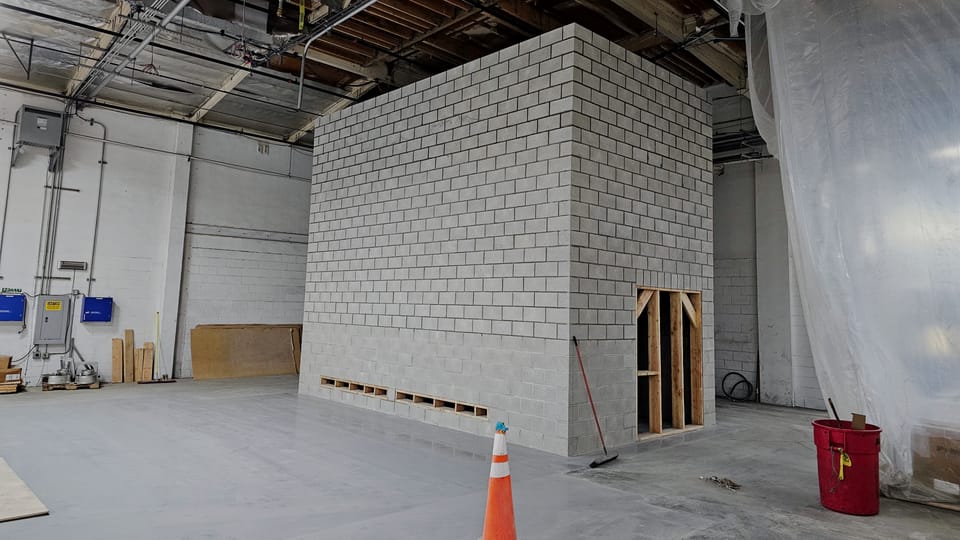
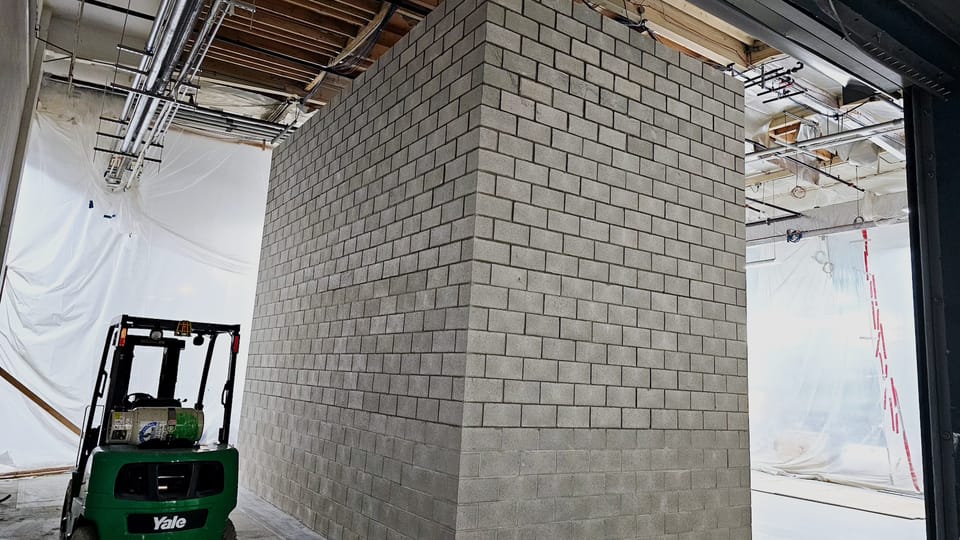
BEFORE — BLOCK WALLS AT MID-HEIGHT → AFTER — WALLS TO FULL HEIGHT
The room's job is to make a bad day survivable
Some operations carry a deflagration risk that cannot be engineered out of the process itself. Combustible dust in a handling step. Solvent vapor in a mixing or coating operation. A material that is safe in bulk and hazardous when it is suspended in air.
When that risk cannot be removed, it gets contained. An explosion room isolates the operation so that an event inside it stays inside it: the structure holds, the relief path directs the pressure and flame front somewhere safe, and the rest of the plant, and the people in it, are not part of the incident.
Which makes the enclosure a piece of safety equipment. It is engineered to a defined performance criterion, it is inspected, and it has to be built the way it was drawn, because the details that matter are the ones that only matter once.
What the scope covers
| Element | Detail |
|---|---|
| Structural frame and envelope | Built to the design criteria the project's process safety engineering establishes |
| Relief provisions | Panels, ducts, or paths, per the relief strategy defined for the hazard |
| Utility penetrations | Every penetration is a detail, because every penetration is a potential weak point |
| Ventilation | Air and environmental systems. See utility tie-ins |
| Access and egress | Doors, hardware, and how people get out |
| Containment and drainage | Where the process is wet or the material has to be contained |
| Equipment integration | The process equipment inside it. See equipment installation |
| Structural supports and platforms | Access to and around the enclosure. See steel fabrication |
This is not a job to learn on
Most fab shops can build a steel-framed room. Fewer understand that on a hazardous-area enclosure, the specification is not a suggestion and a substitution is not a value engineering opportunity.
A penetration detailed differently than drawn, a fastener pattern reduced to save labor, a relief panel installed with the wrong restraint: each of those is invisible in a finished room and each defeats the reason the room exists.
We build to the design criteria the project establishes, we do not substitute without engineering approval, and we say so when a field condition forces a change rather than making the change and moving on.
Related M3E enclosure types
| Type | Driver |
|---|---|
| Hazardous area enclosures | Deflagration, vapor, and classified-area risk |
| Process enclosures | Holding a process condition. See seed priming rooms |
| Food and pharmaceutical enclosures | Sanitation and contamination control |
| Equipment and utility enclosures | Weather, security, acoustic, and access protection |
| Manufacturing support structures | Platforms, mezzanines, and access around all of the above |
Divisions
Related services
Industries
Industries this work runs in
Common questions
What is an explosion room?
It is a hazardous-area enclosure built to contain and safely relieve a deflagration event, so that an incident inside the room does not become an incident inside the plant. The design is driven by the hazard analysis for the specific material and process: dust or vapor characteristics, room volume, and the relief strategy the project's process safety engineering defines.
Can you build one inside an operating facility?
Yes. Executing complex installs inside live operating plants, where safety, coordination, and schedule control are critical, is the core of the business. Enclosure construction is generally sequenced around production with prefabricated panels and frames, hot-work containment, and the disruptive portion scheduled off-shift.
What industries need these?
Anywhere combustible dust or flammable vapor is generated or handled: chemical processing, coating and solvent operations, grain and seed handling, powder processing, and some food and pharmaceutical operations. See chemical processing and seed processing.
How does an explosion room differ from an equipment enclosure?
An equipment enclosure protects equipment from the environment. An explosion room protects the environment from the equipment, and it is engineered to a performance criterion with a defined failure behavior. The construction discipline is different, the inspection is different, and the consequence of building it approximately is different.
Tell us the material and the hazard determination
If a process safety engineer or insurer has already made the determination, send it. That document is the start of the design.