Brewery Equipment Fabrication in Chico, California
Chico is 90 miles up Highway 99 from our shop, about an hour and a half. It is a town with an unusual industrial signature for its size: one of the largest craft breweries in the country, a state university, and a ring of almond and rice processing that turns the whole Sacramento Valley crop into something shippable.
Those two industries — brewery equipment fabrication and nut and grain processing — share a technical problem that most fabricators underestimate. Both involve atmospheres that will hurt you. A brewery cellar accumulates carbon dioxide. A huller generates combustible dust. In both cases the steel we build has to be designed with the hazard in mind, and the way we build it on site has to respect the hazard too.
Coverage
- 90 mi
- Rancho Cordova shop to Chico, Highway 99 north
- ~1.5 hr
- Drive time, one way
- 300 mi
- Inside the full EPC and preventative-maintenance band
- 600 mi
- Field services, fabrication delivery, and rigging
What We Build for Chico Facilities
Tank platforms and cellar access. Catwalks, platforms, stairs, and access systems around fermentation and brite tanks, engineered for the load and detailed so an operator can actually reach a valve and a sample port from a stable surface.
Brewhouse and process support steel. Structural supports for vessels, grain handling, mills, and mash equipment, plus the mezzanine and platform steel that gets a growing brewery vertical when it runs out of floor.
The full detail
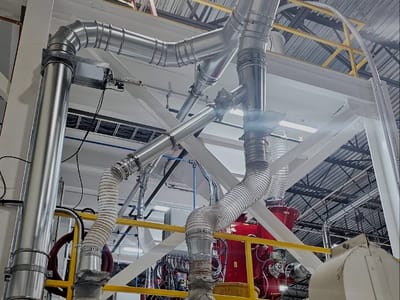
Dust collection and air handling. Ducting, hoods, cyclone and collector support structures, and the sheet-metal scope for nut hulling, rice milling, and grain handling — designed with combustible dust in mind rather than treated as ordinary ventilation.
Sanitary and washdown-rated fabrication. Continuous welds, ground and polished seams, surfaces that drain, no ledges that hold product or water. Food and beverage cleaning here is aggressive, frequent, and inspected.
Utility and glycol supports. Piping supports, pump skids, chiller and glycol line supports, and the steel that carries the utilities a cellar depends on year-round.
Custom processing and handling equipment. Conveyors, transfers, elevators, and handling equipment sized to the actual product and the actual building, plus barrel and keg handling equipment built to the geometry you have.
Campus and institutional work. Lab and shop support structures, equipment platforms, and access systems for university facilities, sequenced around class schedules and with the site discipline that occupied buildings require.
What Chico and Butte County Actually Process
Sierra Nevada Brewing Co. has operated in Chico since 1980 and now ranks as the second-largest craft brewing company in the United States on the Brewers Association's most recent Top 50, with roughly a thousand employees. A brewery at that scale is not a taproom with tanks — it is continuous-process food and beverage manufacturing with its own wastewater treatment, packaging lines, cooperage, rail access, and a maintenance department that thinks like a plant's.
Around it, Butte County runs a serious agricultural processing economy — about $589 million in total agricultural value in 2024, with walnuts taking the top spot for the first time at roughly $150 million, almonds close behind near $122 million, and rice third around $118 million. The value-added work — hulling, shelling, drying, milling, and packaging — happens in facilities scattered along the Highway 99 and Highway 32 corridors and out into the county on the roads between the orchards. Chico itself hosts real processing infrastructure, including operations like the Shasta Vista Almond Huller and the Butte Creek Rice Dryer. Rice drying and milling in particular is an equipment-heavy, dust-heavy business with a hard seasonal calendar.
The full detail
Chico also carries a small but real manufactured-goods sector. Klean Kanteen and Transfer Flow both manufacture in Chico — stainless drinkware and aftermarket fuel systems respectively — which are metal-forming and fabrication businesses in their own right and a reminder that this town has more metalworking competence per capita than its size suggests.
California State University, Chico anchors the institutional side, with the facilities, laboratory, agricultural research, and utility infrastructure that a full campus carries, including a university farm.
The industrial geography is compact. The Hegan Lane and Otterson Drive areas hold most of the city's industrial and flex inventory, and almost everything else is a short drive along 99 or 32. For a fabricator this is convenient: several sites can be walked in one trip.
Getting to Your Chico Facility
90 miles, Highway 99 the whole way, about an hour and a half. This is a comfortable same-day round trip with real time on site, and it is one of the more reliable drives in our service area — 99 north of Sacramento is rural highway rather than urban freeway, so the travel time is predictable in a way the Bay Area routes are not.
The one seasonal caveat is winter. Tule fog settles into the Sacramento Valley from roughly November through February and can drop visibility on 99 to near zero at dawn. A crew that planned a 4 a.m. departure without accounting for it arrives late to a window that does not move, so we schedule winter starts with margin rather than optimism.
Chico pairs naturally with Redding, 70 miles further up I-5, and with the Yuba City and Marysville processing corridor on the way back. When several northern jobs are open we run them together and spread the mobilization.
Two Constraints That Change How We Work Here
Combustible dust is a design input, not a housekeeping issue. Almond hulling and shelling, rice milling, and grain handling all generate dust that will deflagrate given an ignition source, oxygen, and suspension — which is why agricultural processing facilities are governed by dust-specific fire-protection standards, including NFPA 61 for agricultural and food processing and the broader combustible-dust guidance in NFPA 652. For a fabricator that has three concrete consequences. Dust collection has to be designed as a fire-protection system, meaning explosion relief, isolation, ducting routing, and collector siting are engineering decisions rather than ventilation preferences. Structures inside a dust environment need surfaces that do not accumulate dust — flat tops, ledges, and horizontal flanges are liabilities, and detailing them out is a design choice we make deliberately. And hot work in these facilities is a permit-and-procedure matter with real teeth: welding or grinding near a huller during season is frequently prohibited, so we plan bolted connections and off-season hot work rather than assuming we can cut in place. Confirm the applicable standards and your facility's requirements with your fire protection engineer and authority having jurisdiction.
Brewery cellars accumulate carbon dioxide, and CO2 is heavier than air. Fermentation produces it continuously, it pools in low areas, pits, and tank enclosures, and it displaces oxygen without any smell or visual warning. Work in and around a cellar means monitoring, ventilation, and often permit-required confined space procedures for tank interiors, trenches, and pits. It also shapes the steel: access platforms should not create unventilated pockets, and the layout should give an operator an escape route rather than a dead end. We treat CO2 as a design consideration in cellar access work, not only as a safety briefing item. Confirm your facility's confined-space program and monitoring requirements before any tank-interior scope.
Published 2026 Budget Pricing
We publish our numbers. Nobody else in this market does. Dust collection systems and custom processing equipment are quoted per project; the ranges below cover the standard structural and access scope.
| Item | 2026 budget range |
|---|---|
| Standard steel handrail, 2-line | $140–$185 per linear foot |
| Guardrail system, 42" OSHA | $165–$225 per linear foot |
| Fixed ladder, 20–30 ft | $3,500–$7,500 |
| Steel-framed roof access hatch | $3,500–$8,000 |
| Light-duty steel mezzanine | $18,000–$35,000 |
| Heavy industrial steel mezzanine | $35,000–$75,000+ |
| Mechanical or generator enclosure | $8,000–$25,000+ |
Fabrication only. Final pricing moves with material selection, structural requirements, engineering review, finish type, complexity of fabrication, and project scope and quantity. Installation is quoted after a site visit and field review. See the full 2026 price guide →
Related Work
Dust collection and air handling → — Ducting, hoods, and support steel routed through an operating facility. The most directly relevant portfolio item for Butte County's hulling, milling, and grain handling operations.
Custom barrel handler → — Barrel handling equipment built to a specific cellar's rack geometry and forklift. The same problem a brewery has with barrels, kegs, and totes.
DUCT AND PIPE — HUNG AND BRANCHED 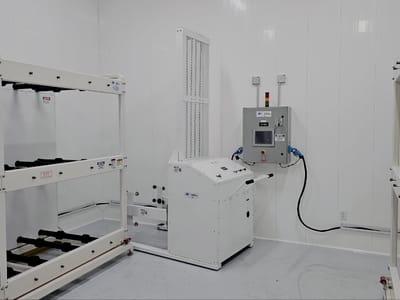
BARREL HANDLER — INSTALLEDBREWERIES & WINERIES · DWG PRJ-05


Service area
Nearby
Divisions
Related services
Structural Steel Fabrication and Erection
Structural and miscellaneous steel fabrication in Rancho Cordova. Platforms, mezzanines, supports, and access systems. Engineers on staff who stamp.
Custom Processing Equipment Design and Build
Custom processing equipment, skid systems, and automated material handling. Sanitary washdown design, PLC-ready. Engineers and fabricators under one roof.
Utility Tie-Ins and Process Piping
Process utility piping, industrial plumbing, secondary containment, air and environmental systems. Bundled with a project or contracted standalone.
Industries
Industries this work runs in
Brewery and Winery Equipment Installation
Winery and brewery equipment installation: tanks, presses, conveyance, barrel handling, platforms, and utility tie-ins. 600 miles from Sacramento.
Food and Beverage Processing Equipment Installation
Food and beverage processing equipment installation inside live plants. Sanitary supports, utility tie-ins, washdown design. 600 miles from Sacramento.
Campus Facilities and Research Equipment Installation
Campus facilities contractor for equipment installation, structural steel, and utility work. Sequenced around class schedules and shutdown windows.
Portfolio
Related project work
Dust Collection and Air Handling System Installation
Dust collection and environmental system installation, including a large-scale process enclosure and air handling package inside operating facilities.
Custom Barrel Handler for Winery Operations
Purpose-built barrel handling equipment designed and fabricated for winery operations. Custom equipment from engineers and fabricators under one roof.
Coverage
- 600 mi
- Field services, installation, fabrication delivery, and rigging from Sacramento
- 300 mi
- Full EPC delivery and preventative-maintenance programs
- Nationwide
- Engineering, design, and fabrication for shipment
Frequently Asked Questions
Do you design dust collection as a fire-protection system or just as ventilation?
As a fire-protection system, because in a nut or grain facility that is what it is. Explosion relief, isolation between the collector and the building, ducting routing, and where the collector sits are engineering decisions driven by the dust's properties and the applicable standards — NFPA 61 for agricultural and food processing, with broader combustible-dust guidance in NFPA 652. We also detail the surrounding structure to shed dust rather than collect it. Tell us what the material is and whether you have a dust hazard analysis, and confirm the requirements with your fire protection engineer and authority having jurisdiction.
Can you do hot work in our huller during season?
Usually the honest answer is no, and we would rather say that at quoting time than discover it in the field. Welding, cutting, and grinding near combustible dust is a serious ignition risk and is often prohibited outright during processing. Our approach is to design bolted and mechanically fastened connections for in-season work, prefabricate everything possible in the shop, and schedule any genuine hot work for the off-season under your facility's permit process.
How do you handle CO2 in our cellar?
With monitoring, ventilation, and — for tank interiors, pits, and trenches — permit-required confined space procedures. CO2 is heavier than air, it pools in low spots, and it displaces oxygen with no warning, so it gets treated as a real hazard rather than a nuisance. It also affects the design: we avoid creating unventilated pockets with platform layouts and we make sure an operator has a route out rather than a dead end. Confirm your confined-space program with us before any tank-interior work is scoped.
When should a brewery or processor schedule structural work?
For nut and rice processors, outside the harvest and processing season — which in practice means winter and early spring, and that window fills early. For a brewery running year-round, there is no true off-season, so the work happens in shorter, more frequent windows: a weekend, a single line down, a tank out of rotation. Tell us the window you actually have and we will tell you honestly whether the scope fits in it, including whether it needs to be split across two windows.
Is Chico too small a market for you to bother with?
No, and the drive is one of the easier ones we make. Ninety miles of predictable rural highway is a same-day round trip with real time on site, and Chico pairs naturally with Redding and with the Yuba City and Marysville processing corridor — so when several northern jobs are open, mobilization gets spread across them rather than billed to each. There is also more metalworking competence per capita in this town than its size suggests, so we are not the only option and we do not pretend to be.
Do you work with CSU Chico or the university farm?
We build for campus and institutional facilities, with the understanding that the constraints differ from a production plant: access control, noise and dust limits near occupied buildings, work sequenced around class and trial schedules, and clean job sites at the end of every shift. Agricultural research facilities in particular tend to revise a specification once somebody sees a mockup, which is easier to accommodate at 90 miles than at 900. → **
Call (916) 842-7402
Send drawings, a photo, or a rough scope. We answer with questions before we answer with a number.
Miller 3 Engineering · 2530 Mercantile Dr Ste H, Rancho Cordova, CA 95742 · CA LIC #1136711